
In the vast universe of gaming journalism, one finds themselves surrounded by experts speaking in tongues about franchises they've dedicated thousands of hours to. The writer, a self-professed non-player of Destiny 2, exists in this ecosystem like a librarian in a spaceship hangar—surrounded by impressive machinery but without the pilot's license to operate any of it. Colleagues like Features Editor Eric Switzer produce deep dives into the game's evolving world, from celebrating its inclusion of 'sexy dudes' to analyzing its unique adaptation to gaming trends. The writer absorbs these insights secondhand, understanding the basic premise: epic guardians battling cosmic evil across the galaxy. Yet, 2025's major narrative push, Lightfall, introduced a central antagonist so visually dissonant from expectations that it demanded commentary, even from an outsider's perspective.
The Problem of Physical Form in Sci-Fi Villains
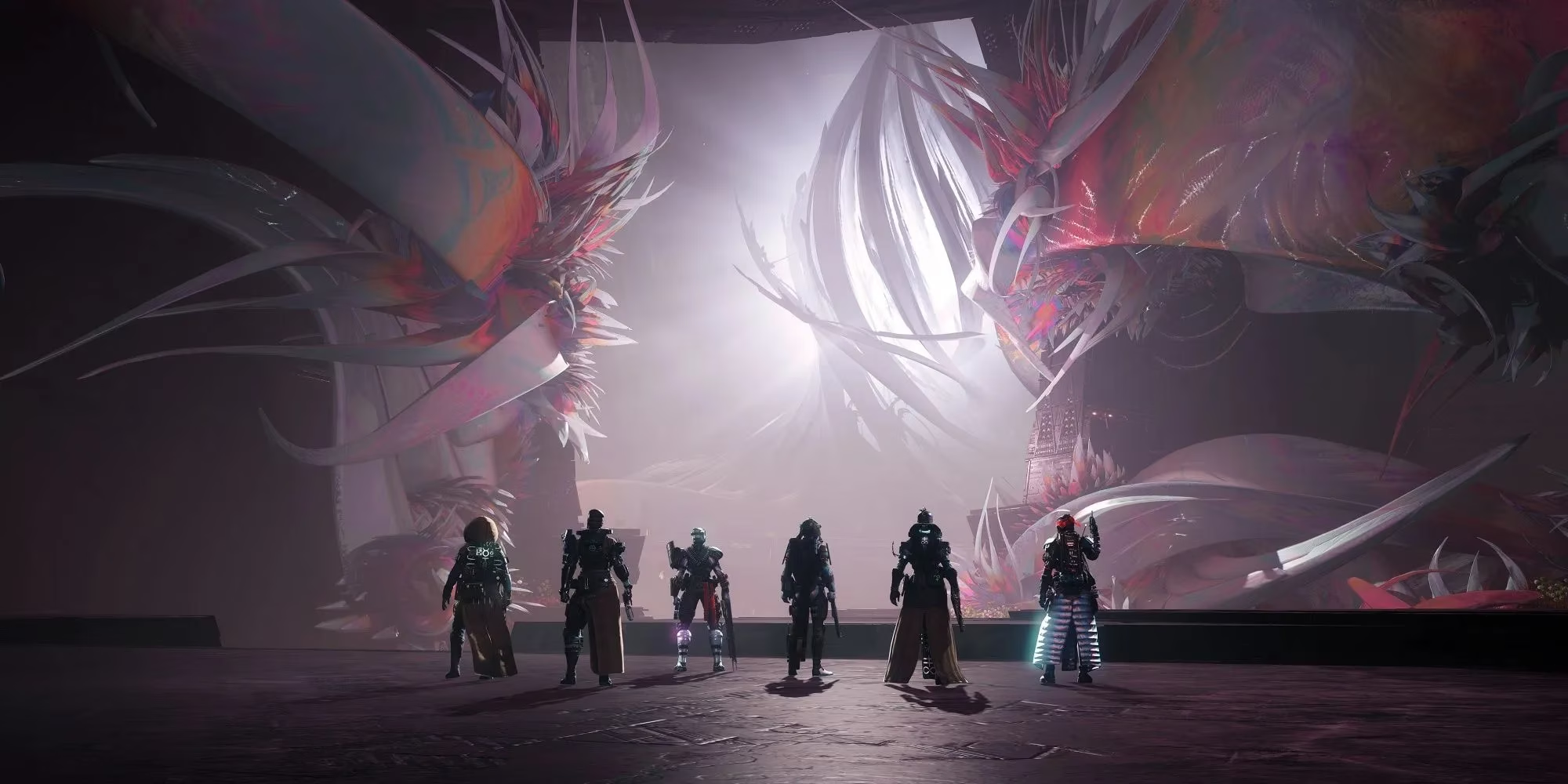
Science fiction often wrestles with a fundamental narrative challenge: how to give form to the formless. A villain that exists as an abstract concept—a whisper of cosmic dread, an unspeakable horror lurking in the aether—is like a storm cloud on the horizon; its threat is magnified by everything the imagination pours into it. It becomes a canvas for our deepest fears. However, the moment this terror requires a physical body, a tangible presence for the hero to confront, the magic often deflates. The transition from conceptual horror to a creature with a face and limbs can be as disappointing as finding a pig's head on a stick where you expected a Lovecraftian deity. This is the tightrope every sci-fi story must walk.
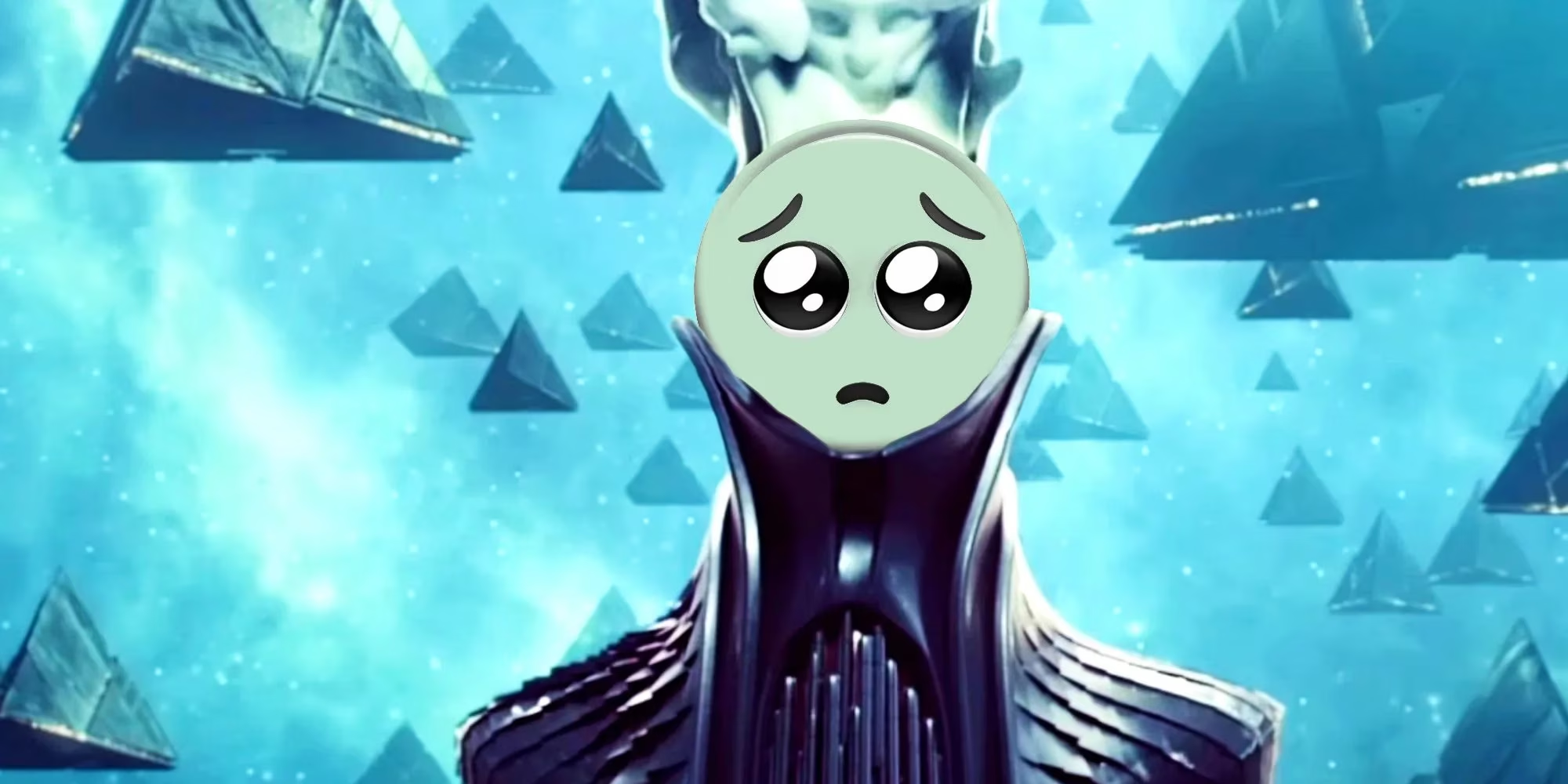
The Genius of the Mask: Lessons from Iconic Villainy
Some franchises navigate this challenge with masterful design. The writer points to the timeless example of Darth Vader from Star Wars. Vader's imposing silhouette, defined by his iconic helmet and cape, gives him a clear, threatening physicality. Yet, the helmet serves a dual purpose: it hides the man within, allowing audiences to project their own imagined monstrosity onto the character. He is both present and unknowable. His ultimate defeat is symbolized by the removal of the mask, revealing a fragile, broken man beneath the armor. Destiny itself has a history of using helmets to great effect for its characters, creating a sense of mystery and unity among its guardians. The Witness, however, defiantly forgoes this tradition.
Meet The Witness: Destiny's 'Wittle Uwu Baby'
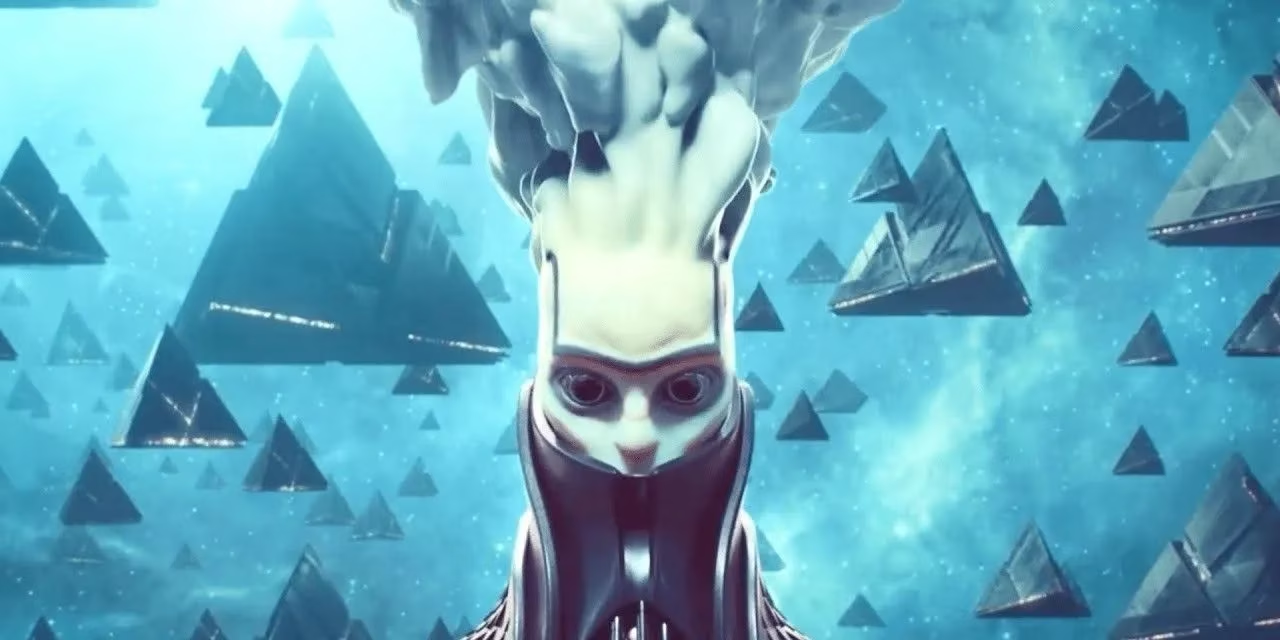
Instead of a helmet or a monstrous visage, The Witness presents a countenance that is… surprisingly gentle. Their face is framed by what looks like a cozy scarf, wrapped snugly as if a little boy was sent out to play in the snow. They possess large, expressive 'uwu Disney Princess eyes', a delicate button nose, and hair that flows outward like spray foam from a can. This design stands in stark contrast to Destiny's established aesthetic, which the writer describes as 'chunky and angular,' filled with heavy-set, 'meaty' creatures boasting sharp corners and spikes.
The writer notes the classic trope of a physically unimposing mastermind commanding brutish enforcers. Yet, The Witness isn't the frail, elderly warlord or the scrawny, mad scientist archetype. This villain is something else entirely—a being whose visual presentation leans into an almost cherubic softness. The immediate, involuntary reaction, as the writer admits, is to see a 'wittle uwu baby, yes they are, yes they are, oooh they're so cute.' This creates a fascinating dissonance between the character's supposed role as the universe-ending 'Big Bad' and their visual design.
Aesthetic Dissonance and Narrative Intrigue
This is not meant as disrespect to the Destiny community. The writer draws a parallel to their own favorite game, Final Fantasy VII, acknowledging that the iconic clash between Cloud and Sephiroth could easily be framed as a 'Battle of the Femboys.' They recognize that the 'scary dude vs. scary dude' formula can grow stale, and subverting expectations is a valid creative choice. The promotion of Lightfall as a perfect starting point for new players in 2025 is what finally pulled the writer into the orbit of Destiny's narrative. The central promise was a confrontation with ultimate cosmic might, and the face of that might is this 'little coochie-choo cherub.'
| Feature | Typical Destiny Aesthetic | The Witness's Design |
|---|---|---|
| Silhouette | Chunky, Angular, Spiky | Soft, Flowing, Rounded |
| Facial Features | Often Hidden or Monstrous | Exposed, Expressive, 'Disney-esque' |
| Overall Vibe | Heavy, Meaty, Imposing | Delicate, Ethereal, Cherubic |
Despite this newfound fascination, the writer confesses that even the appeal of an androgynous, universe-ending Disney Princess entity isn't enough to convert them into a Guardian. The game, they conclude, simply isn't their preferred flavor of interstellar adventure. The new assault rifles and hype trains hold no sway. Yet, they leave with a genuine appreciation for The Witness. In a genre saturated with predictable designs, this villain's unexpected and almost vulnerable appearance is a bold choice. It’s a reminder that true menace isn't always found in sharp edges and roaring mouths; sometimes, it looks back at you with the most darling eyes you ever did see—a silent, cosmic threat as unsettling as a lullaby sung in the void of space .