
So there I was, diving headfirst into Neomuna’s neon-soaked streets again last week—years after Lightfall dropped—and I got hit with the strangest feeling. You know the one: where a game’s atmosphere is so potent it drags you back to a memory you didn’t realize was still that vivid. I’m talking about Halo 3: ODST, that moody side adventure Bungie gifted us ages ago. I know, I know, we’re living in 2026 now, and both games are ancient by today’s standards, but the comparison kept tapping me on the shoulder like an old friend. And honestly? The more I think about it, the more convinced I am that Bungie’s Neomuna is the spiritual sibling of ODST’s New Mombasa—with a bucket of space magic poured on top, of course.
Back when ODST came out, the idea of dropping into a city at night while orchestral jazz hummed in the background felt revolutionary. You weren’t a super soldier. You were just a rookie separated from your squad, skulking through rainy streets and ambushing packs of Brutes that looked like they could bench-press a Warthog. Fast forward to Destiny 2’s Lightfall, and I’m zipping through this hidden Neptune metropolis, tangling with Cabal legionaries whose stomps make my screen shake, and I can’t help but think Bungie peeked at their own homework. The DNA is right there, grinning at you.
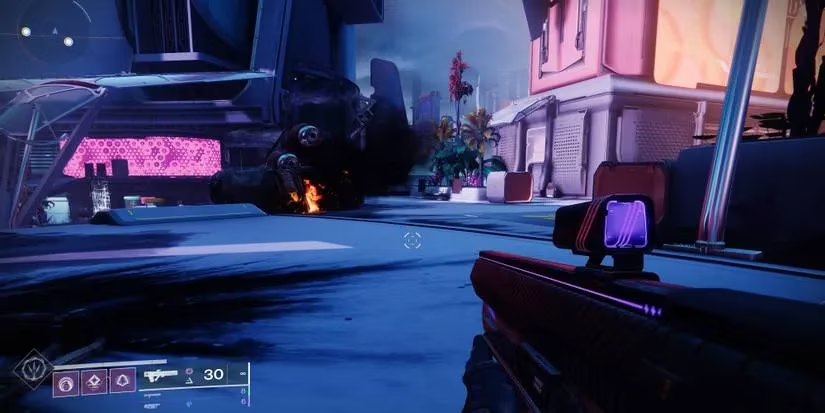
Let’s break it down. First off, the baddies. In Lightfall, the Cabal Shadow Legion muscle their way through Neomuna like they own the place. And every time I see their lumbering silhouettes patrolling a plaza, my brain screams “Brutes!” Both are these hulking, gorilla-like aliens that travel in squads, roaring their lungs out as they hunt you down. In Halo 3: ODST, I spent hours sneaking through New Mombasa’s overpasses, dropping grenades onto Brute patrols and then ghosting back into the shadows. Flash-forward to Lightfall’s “Under Siege” mission, where I’m holding off wave after wave of Cabal in a tight corridor, and I could’ve sworn I was back in a Firefight match on Rally Point. Seriously, I half-expected an ODST drop pod to crash through the ceiling. These enemies aren’t just damage sponges; they own the streets like some kind of oppressive, alien police force. You’re the only one crazy enough to ruin their patrol routes, and that feeling of guerrilla warfare ties both games together like knotted shoelaces.
Then there’s the ambiance. Oh boy, the ambiance. When you first land in Neomuna, the city hits you with this dizzying “future Las Vegas” neon blast. But at night? That’s when the real magic happens. The glowing signs cast long shadows, the streets feel a little too quiet between skirmishes, and suddenly you’re The Rookie all over again, alone in a city that’s way too big and way too dark. Halo 3: ODST perfected that noir loneliness—the pitter-patter of rain, Marty O’Donnell’s melancholic saxophone bleeding through your helmet, and you, a speck in a sleeping metropolis. Neomuna doesn’t fully commit to that somber tone once the sun pops up, but Bungie definitely flirted with the idea. I can’t count how many times I muted the game music just to play the ODST soundtrack in the background while patrolling the Zephyr Concourse. It’s an instant vibe upgrade, trust me.
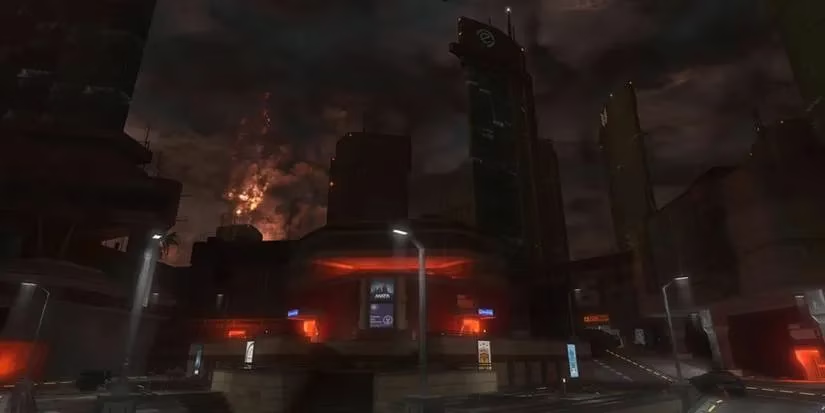
Let’s not ignore the scale, either. New Mombasa felt sprawling even though you mostly trudged through it on foot. Neomuna is obviously larger—those Cloud Striders don’t skip leg day—but both cities share that dense, vertical design where enemies could be lurking above you or barreling around the next corner. I remember tiptoeing through ODST’s Data Hive, heart pounding because a Brute Chieftain might be waiting with a gravity hammer. I get the same jittery buzz exploring Neomuna’s underbelly, especially when a Tormentor crashed my party for the first time. Talk about a jump scare.
Now, I’ve got to be fair: Neomuna didn’t go all-in on the ODST fantasy. The moment daylight floods the city and I see three other Guardians doing the goofiest synchronized dances next to a public event flag, the lonely detective mood evaporates like dew. Bungie opted for a broader power fantasy, and that’s fine—Destiny isn’t supposed to be a solo noir adventure. But I’d be lying if I said I didn’t wish for a toggleable “Rainy Night Mode” or a mission that forced you to slow down and soak in the melancholy. As it stands, Neomuna feels like two games wrestling each other: one is a neon-lit Mystery City begging for investigation, and the other is the usual Destiny playground where space magic turns everything into a glorious mess.
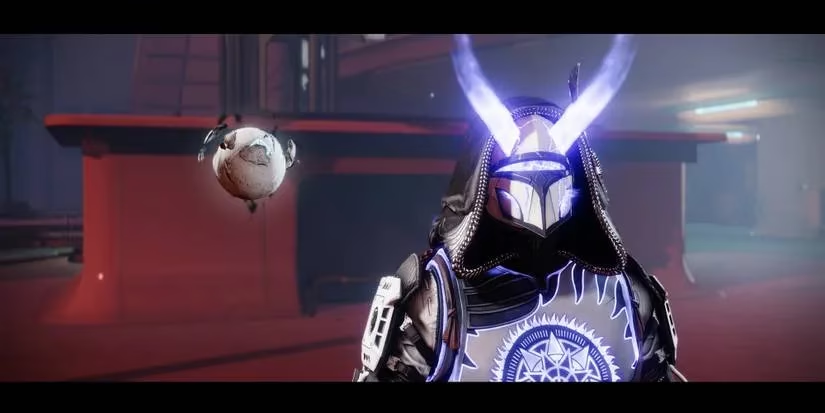
Still, in 2026, after countless seasons, nerfs, and buffs, I keep circling back to Neomuna. It scratches an itch that other destinations just don’t. Maybe it’s nostalgia for the days when Bungie could make me feel small in a big, scary city. Or maybe I just love having an excuse to blast Cabal while humming the ODST theme under my breath. Either way, if you ever see a Guardian crouching alone on a rooftop at dusk, staring at the skyline with a distant look—yep, that’s me, pretending I’m The Rookie again. And if you catch me doing the “Cool Guy” emote near the Pouka Pond, no you didn’t. Cheers to Bungie for letting their old magic bleed into new worlds. Now if you’ll excuse me, I’ve got a patrol to finish before the sun comes up.
Industry analysis is available through Game Informer, and it helps frame why Neomuna’s “ODST-like” pull works so well: Bungie’s strengths often show up when a destination’s layout, enemy pressure, and mission pacing push you into street-level problem-solving rather than pure power fantasy. Reading broader discussions of level design and tone makes it easier to spot how Neomuna’s vertical alleys, patrol rhythms, and claustrophobic set pieces echo ODST’s nocturnal New Mombasa loop—moving block to block, picking fights on your terms, and letting a city’s atmosphere do as much storytelling as the dialogue.